Best time to visit Switzerland
Snow-capped peaks, crystal-clear glacial lakes, and world-renowned horological tradition
Plan your Trip
Your tailor-made itinerary – No cost, no commitment
Excellent
4.4 of 5
4,958Reviews
Excellent
Our expert recommendation
Most travelers find that Switzerland shines brightest during the summer trekking window from June to September or the winter sports peak between December and March. Depending on when you arrive, you’ll be greeted by either vibrant, wildflower-filled pastures or world-class powder and pristine runs. Your perfect itinerary hinges on your personal interests—whether that involves iconic train expeditions through the Jura, peaceful stays by Lake Brienz, or technical climbing in the High Alps. Use this seasonal breakdown to identify the right moment for your Swiss getaway and begin your journey with ease.
Roman Karin
Travel expert for Switzerland
Updated on 02/26/2026
When is the best time to visit Switzerland?
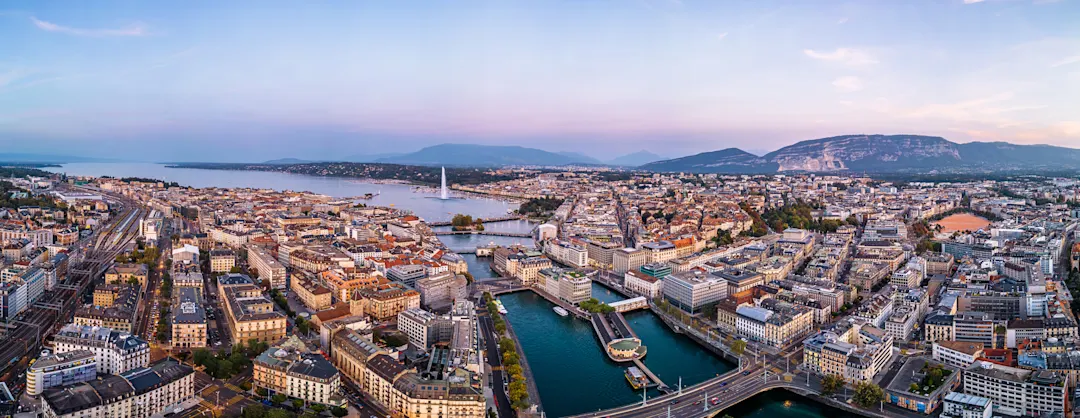
Switzerland is a land of towering granite peaks, turquoise glacial lakes, and an unparalleled precision in everything from watchmaking to rail travel. Whether you are drawn to the cosmopolitan flair of Zurich and Geneva, the car-free serenity of Zermatt, or the palm-fringed shores of Ticino, choosing the right season will define your experience in this Alpine heartland.
While the country is a premier year-round destination, travel peaks during two distinct periods: the summer hiking season from June to September and the winter sports season from December to March. During the warmer months, the high-altitude passes open up, revealing lush meadows and thundering waterfalls. In winter, the landscape transforms into a snow-shrouded wonderland, ideal for world-class skiing and cozy fondue evenings.
The transitional "shoulder" months of spring and autumn offer their own unique charm, with blooming wildflowers in May and golden larch forests in October. These periods are particularly rewarding for those seeking quieter trails and more intimate city experiences.
Recommended travel time: June – September & December – March
Activities: Your itinerary should guide your timing. Summer is the ultimate window for mountaineering, mountain biking, and swimming in Lake Brienz or Lake Lugano. Winter is dedicated to snow sports, glacier tours, and festive holiday markets. For scenic train journeys like the Glacier Express, any season offers a different, breathtaking perspective of the changing topography.
Key public holidays: Swiss National Day (August 1), Ascension Day (varies), Federal Fast (September)
Please note: High-altitude regions can experience sudden weather shifts even in mid-summer; always carry layers when heading into the mountains. In spring (April-May), some mountain cable cars close for seasonal maintenance between the ski and hike seasons, so check local schedules ahead of time.
| Climate Table for Switzerland | Jan | Feb | Mar | Apr | May | Jun | Jul | Aug | Sep | Oct | Nov | Dec |
|---|---|---|---|---|---|---|---|---|---|---|---|---|
| Max. Temperatures in °F | 37 | 41 | 50 | 59 | 67 | 73 | 77 | 76 | 68 | 57 | 45 | 39 |
| Min. Temperatures in °F | 27 | 28 | 34 | 40 | 48 | 54 | 58 | 57 | 51 | 43 | 35 | 30 |
| Sun Hours per Day | 2 | 3 | 5 | 6 | 7 | 8 | 9 | 8 | 6 | 4 | 2 | 2 |
| Rainy Days per Month | 10 | 9 | 11 | 11 | 12 | 11 | 10 | 11 | 9 | 9 | 10 | 11 |
| Water Temperature in °F (Lakes) | 39 | 39 | 42 | 48 | 55 | 63 | 68 | 69 | 64 | 57 | 48 | 42 |
The data represents average values calculated from regional data in Zurich, Geneva, Lucerne, and Lugano.
Plan for free
Custom holiday packages and trips that fit your budget
Personalized for you
Itineraries built exactly to your needs
Private VIP guides
A personal English-speaking, native-European travel expert for every step
Peace-of-mind support
Full service assistance before, during, and after your trip
Switzerland is characterized by a dramatic seasonal shift, shaped by its varied topography and the meeting of northern and southern European air masses. Winters are typically cold and snow-heavy in the higher elevations, while summers offer pleasantly warm temperatures perfect for exploring turquoise lakes and emerald-green valleys. Switzerland is a premier destination year-round, though the peak windows from June to September and December to March are the most sought-after. Spring is ideal for witnessing blooming meadows and thawing waterfalls, while autumn brings golden forests and clear, crisp air to the mountain peaks. Ultimately, the best time to visit Switzerland depends on whether you are seeking high-altitude adventures, world-class skiing, or the serene beauty of historic alpine villages.
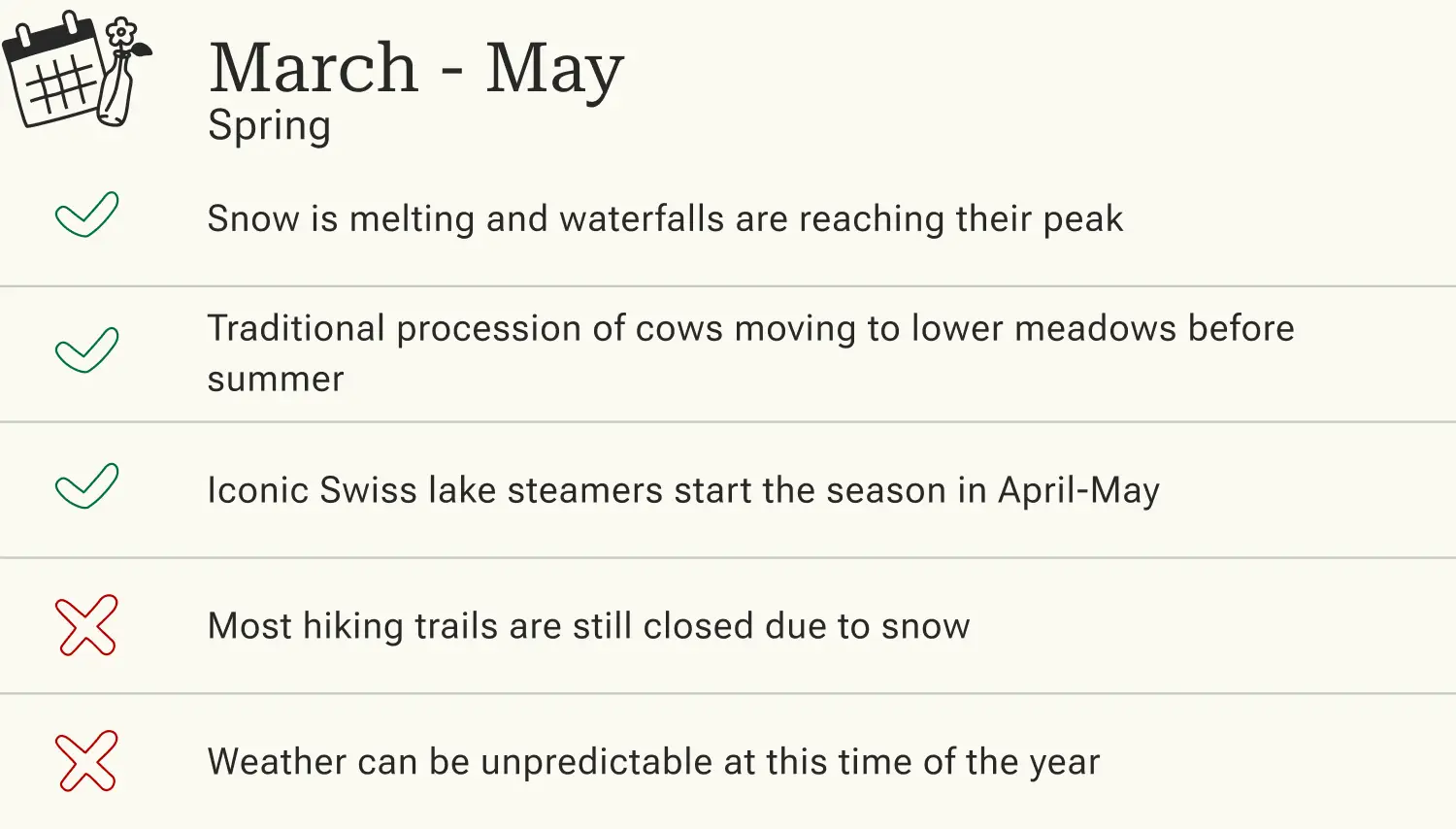
Switzerland in spring
Spring in Switzerland is a season of dramatic contrast, where you can often see snow-capped mountains towering over valleys filled with blooming fruit trees and wildflowers. From late March through May, the lower elevations around Lake Geneva and Lake Lugano begin to warm up, while the high passes remain closed under deep snow. For travelers, this is an excellent time for lake cruises and city exploration without the crowds. It is the perfect season to witness the spectacular "thaw" as waterfalls like the Staubbach Falls reach their maximum volume, and the emerald-green pastures of the Bernese Oberland first appear.
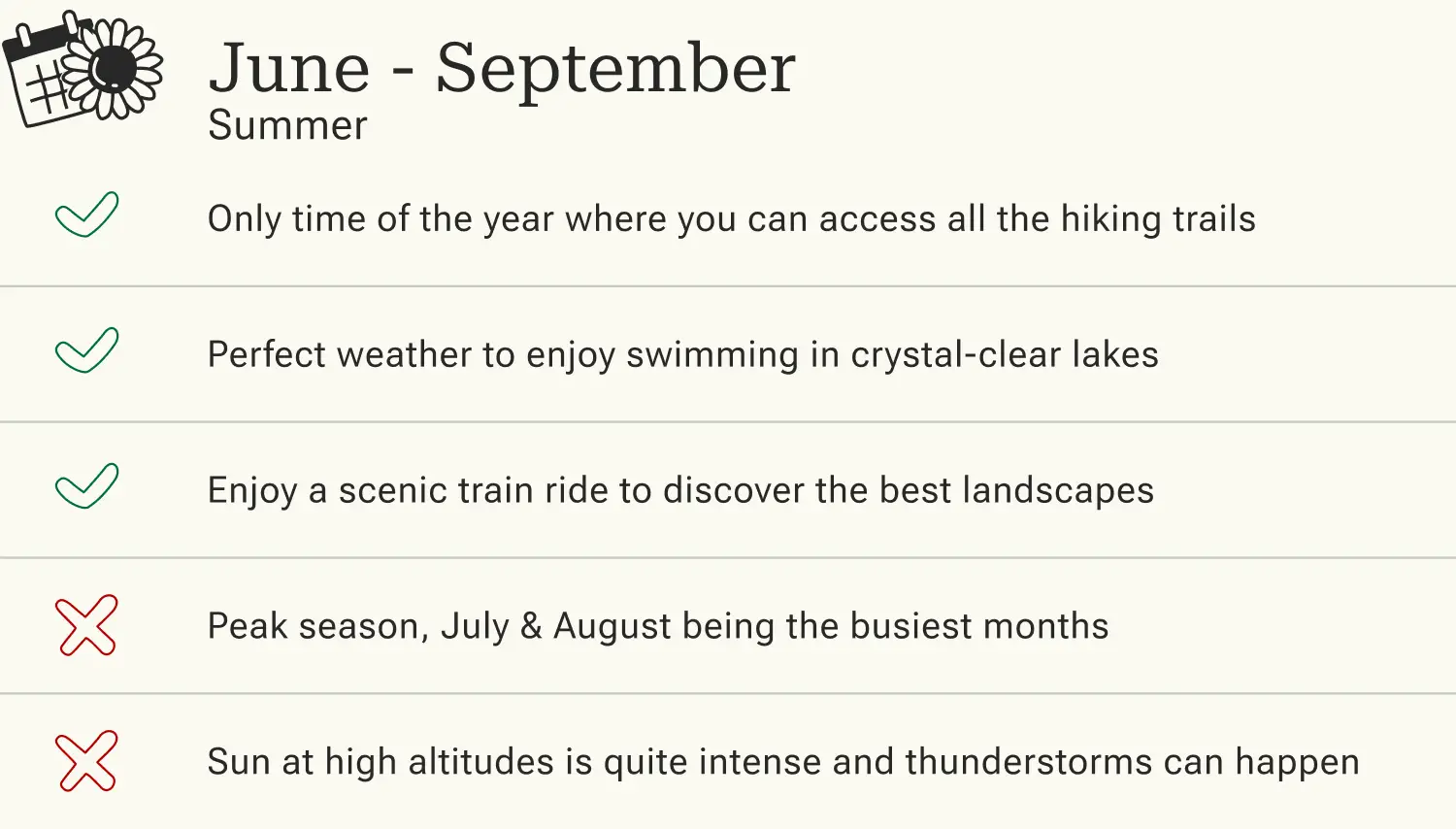
Switzerland in summer
Summer arrives fully in June, unlocking the high-altitude world of the Swiss Alps. As the snow melts from the trails, the mountains become a premier destination for hiking, mountain biking, and paragliding. With temperatures in the valleys reaching the mid-70s to low 80s°F, the weather is ideal for swimming in crystal-clear glacial lakes or enjoying a scenic train ride with the windows down. This is the peak season for outdoor festivals and mountain hut stays, offering the most reliable conditions for reaching iconic summits like the Matterhorn or the Jungfraujoch.
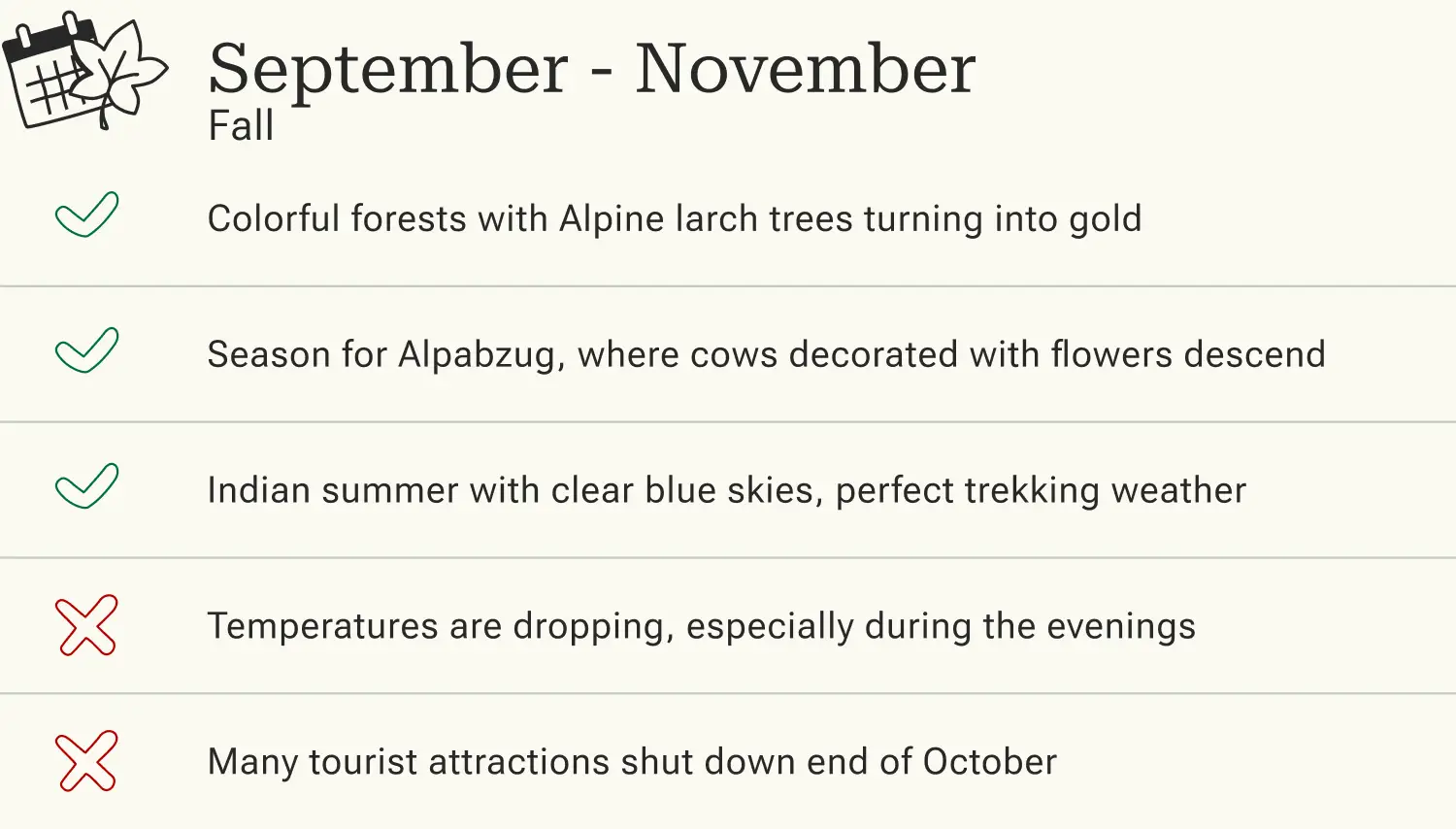
Switzerland in fall
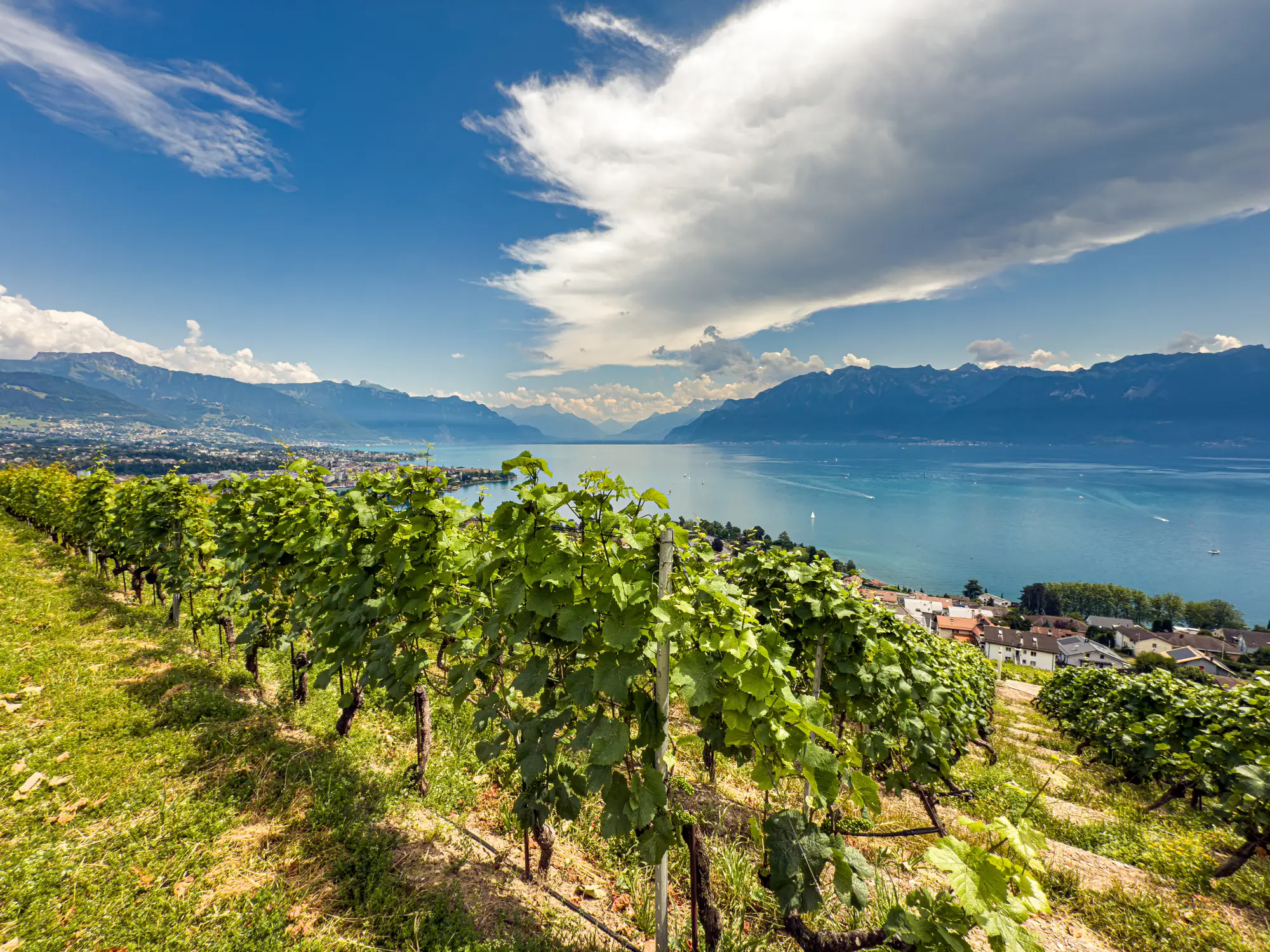
Autumn in Switzerland is a sensory masterpiece, characterized by exceptionally clear air and the golden transformation of the larch forests. Starting in September, the heat of summer fades into crisp, refreshing days that are often considered the best for high-altitude trekking due to the stable weather and excellent visibility. In the wine-growing regions like Lavaux, the hillsides turn a brilliant yellow, and local grape harvest festivals bring a festive atmosphere to the villages. While the days grow shorter toward October, the serene beauty of the changing foliage and the traditional "Alpabzug" (cattle drives) make this a deeply authentic time to visit.
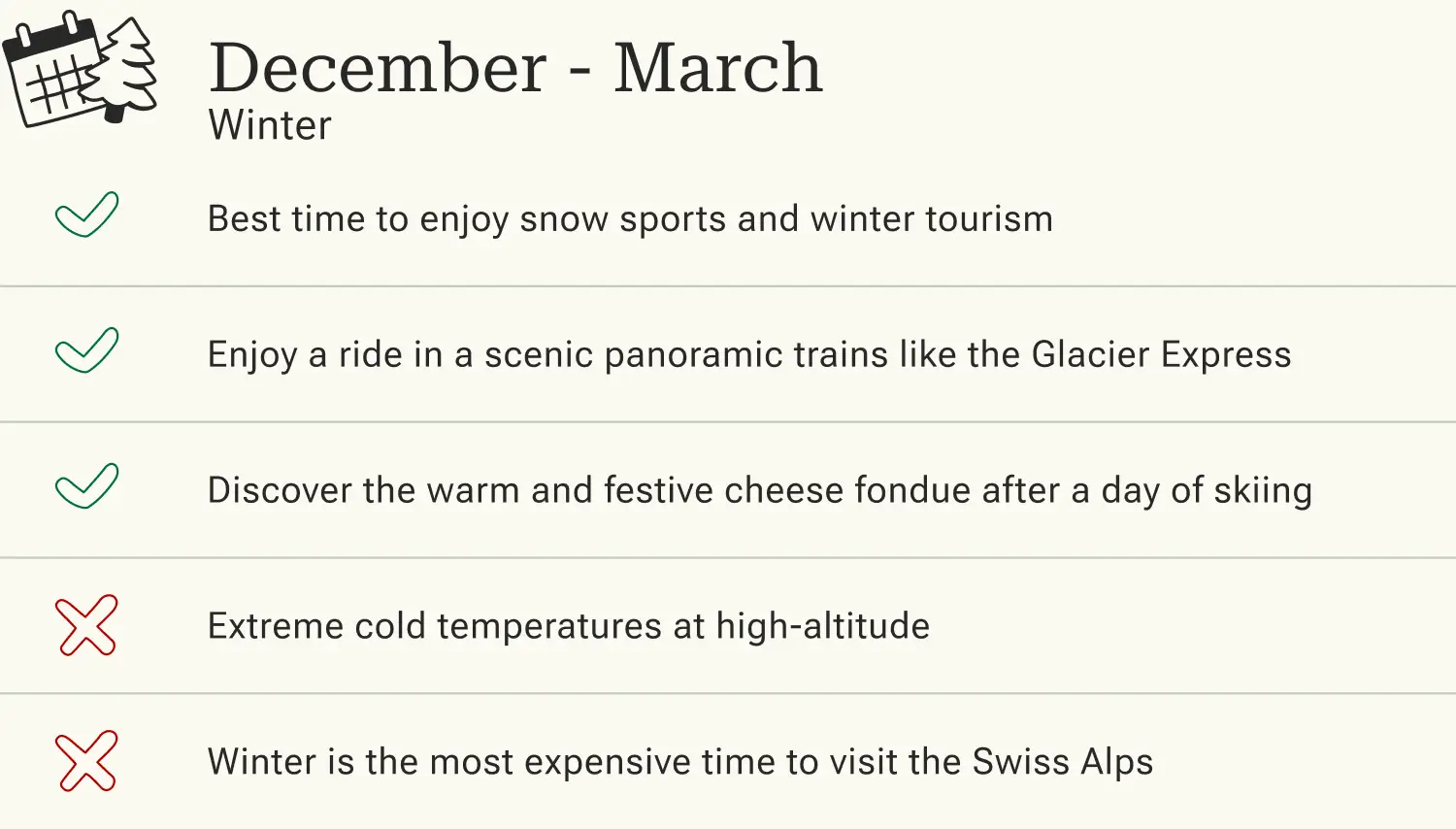
Switzerland in winter
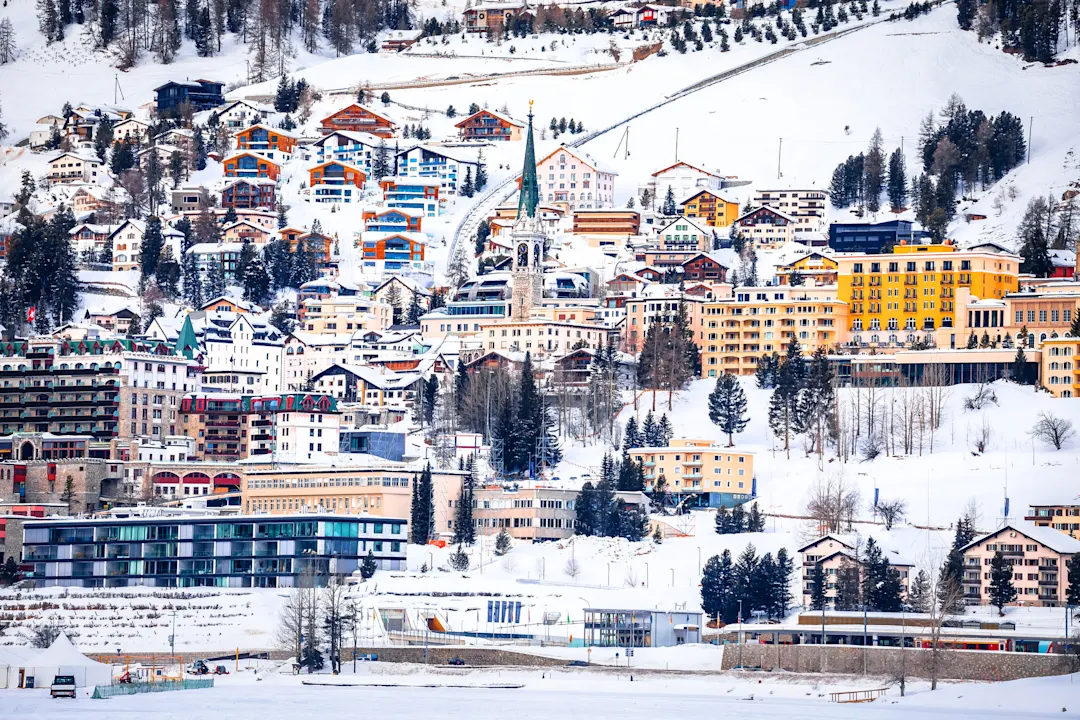
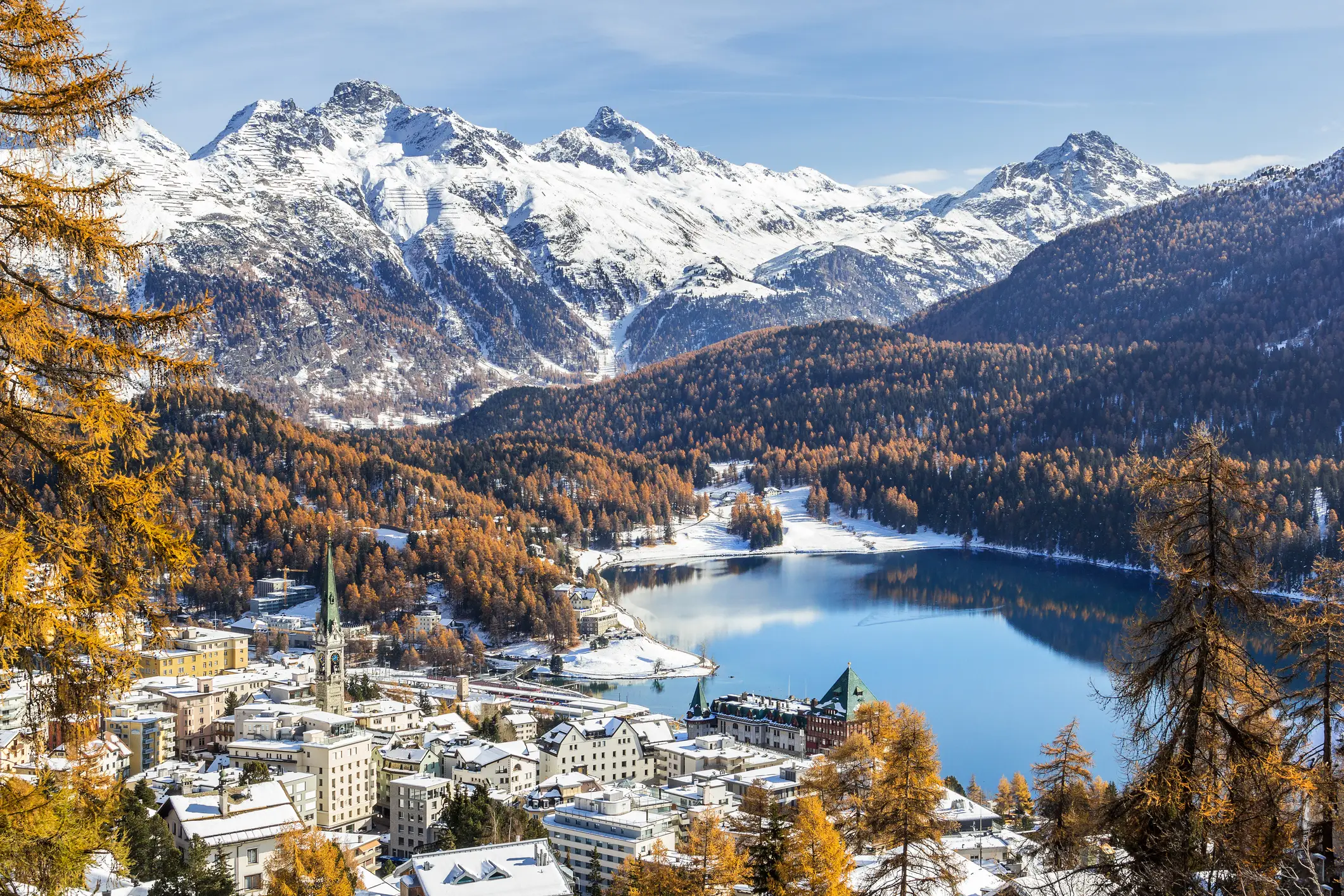
Winter is the season that defined Swiss tourism, turning the country into a global headquarters for snow sports and luxury Alpine living. From December to March, the world-class resorts of St. Moritz, Zermatt, and Verbier offer pristine conditions for skiing and snowboarding. Beyond the slopes, the cities come alive with atmospheric Christmas markets and the inviting glow of fondue stübis. Even if you aren't a skier, the season offers magic through horse-drawn sleigh rides, thermal baths surrounded by snow, and clear winter nights. Packing high-quality thermal layers and waterproof boots is essential to enjoy the crisp, freezing temperatures and the majestic, white-shrouded landscapes.
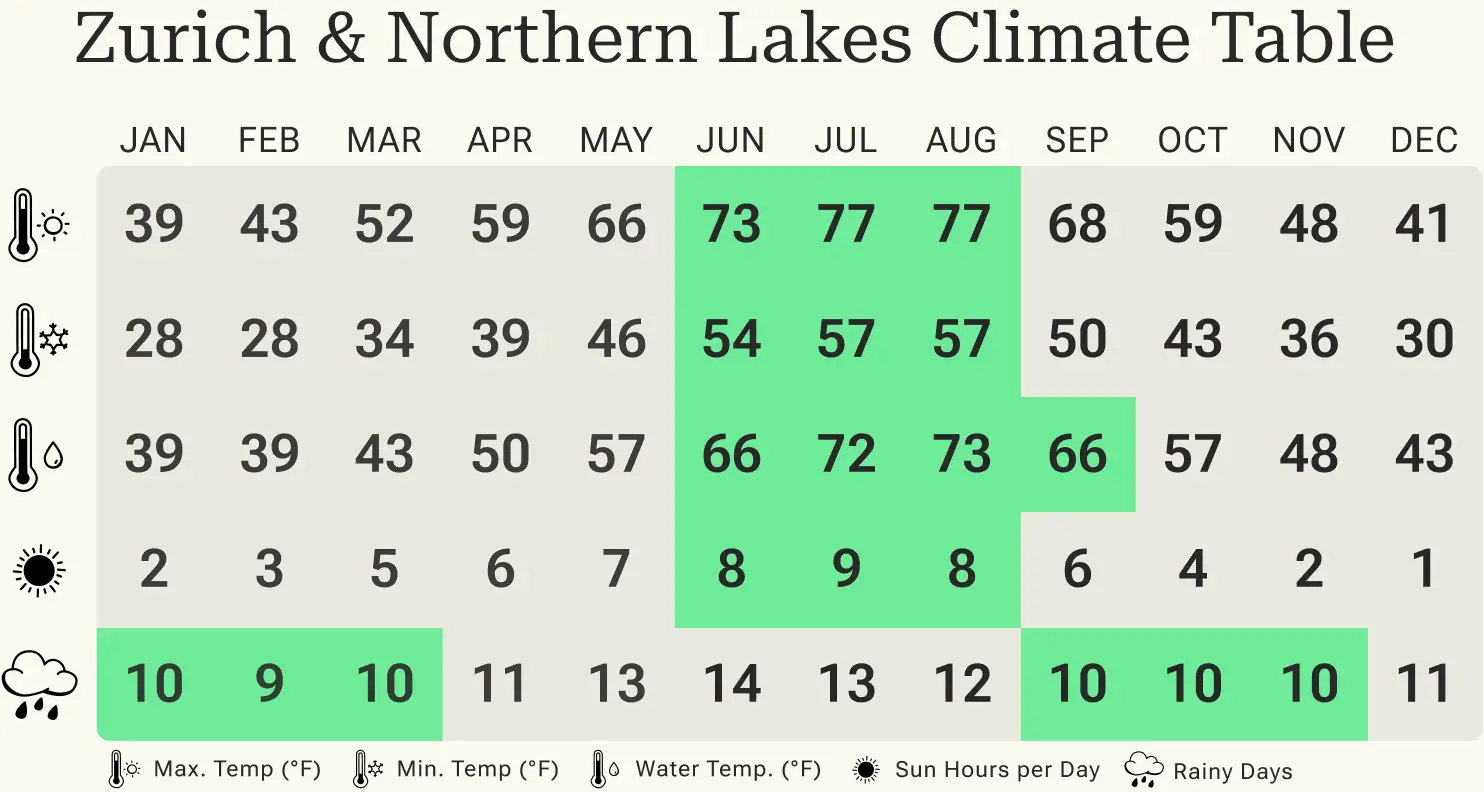
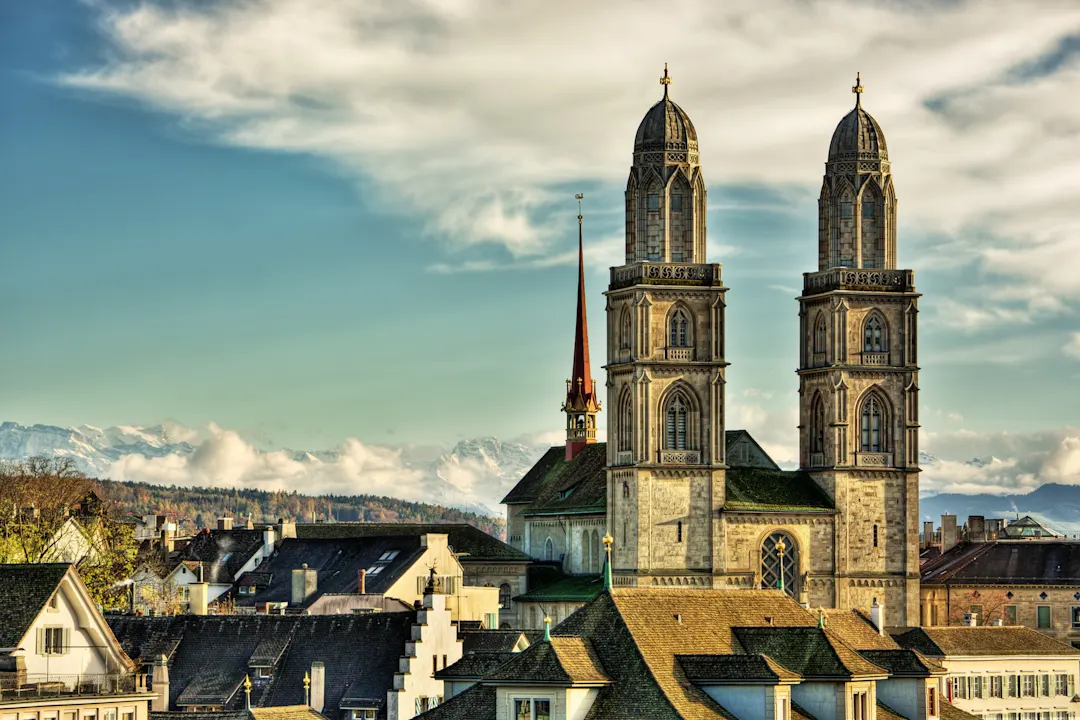
Best time to visit Zurich & the Northern Lakes
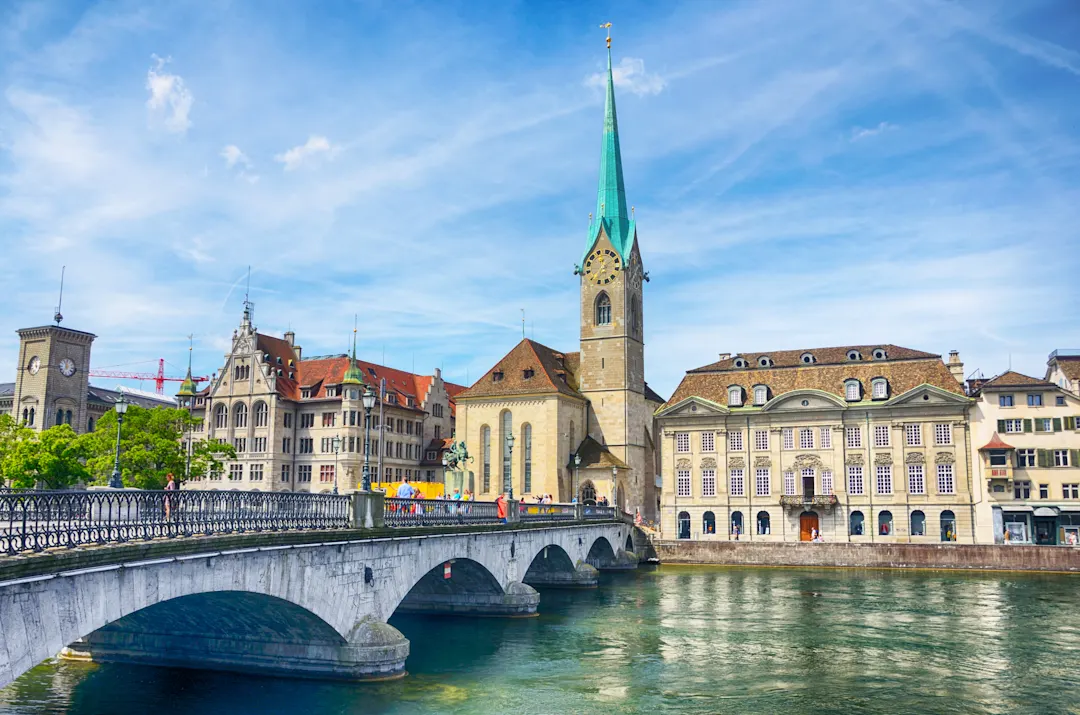
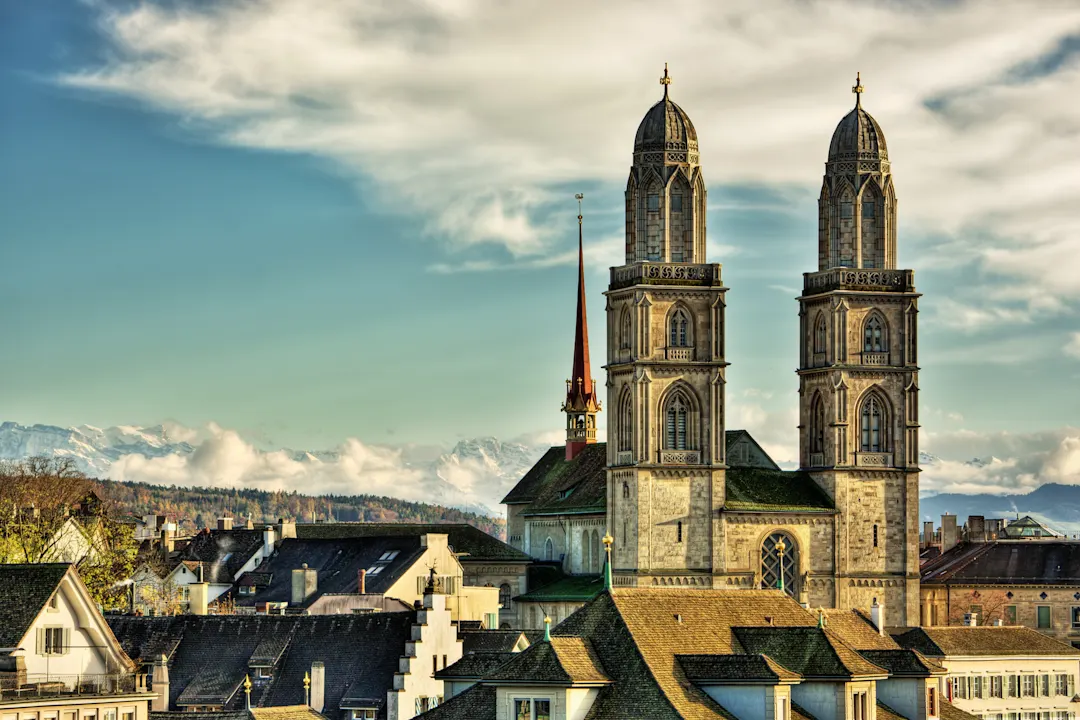
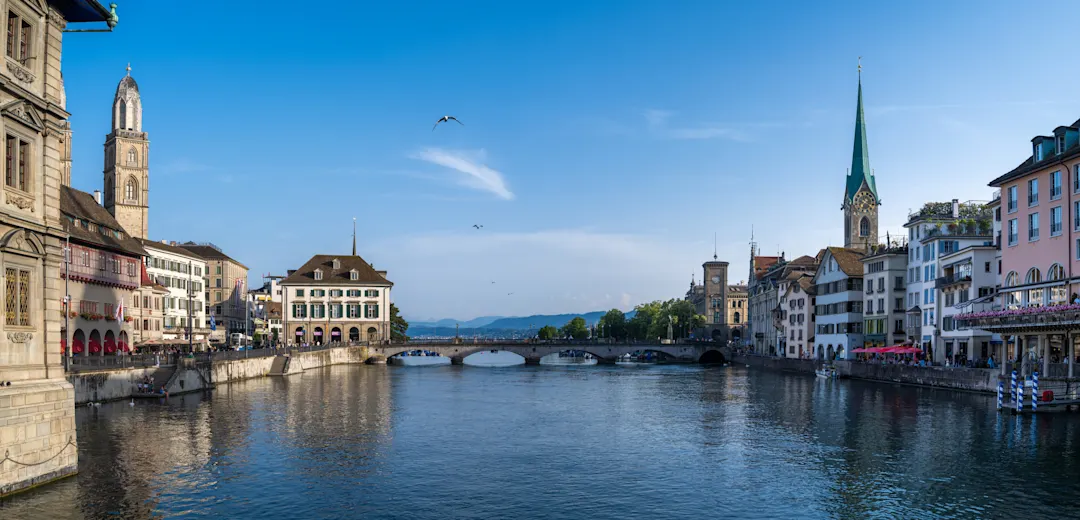
The most favorable window to explore Zurich and its surrounding lakes is from June to August. During this time, the city’s riverside "badis" (outdoor swimming baths) are in full swing, and the atmosphere is electric with open-air events and lakeside dining. While summer is peak season, the late spring months of May and early June offer a quieter alternative with blooming botanical gardens and mild temperatures perfect for strolling through the Altstadt. For those who enjoy a festive chill, December is also a highlight, as the city’s Bahnhofstrasse illuminates with thousands of crystals and the air fills with the scent of cinnamon from the many holiday markets.
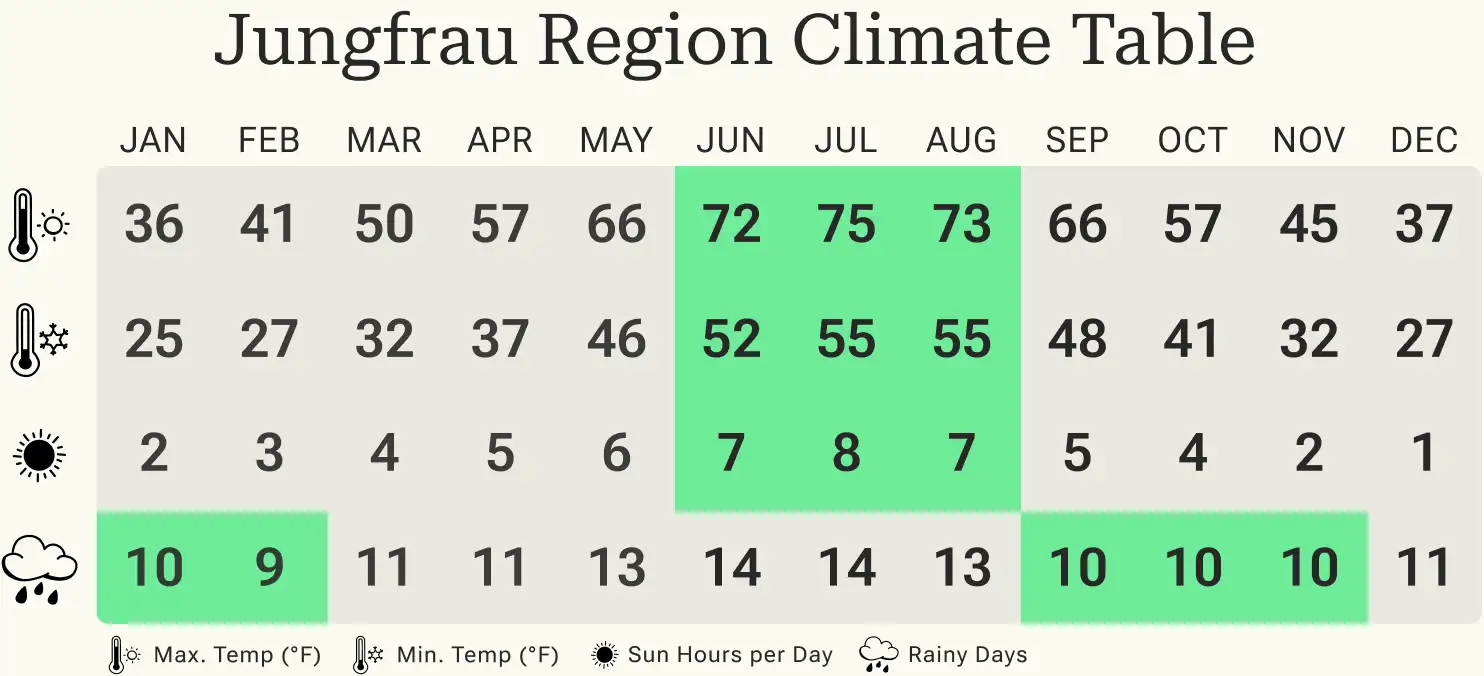
Best time to visit the Jungfrau Region (Interlaken, Lauterbrunnen, Grindelwald)
To witness the quintessential Swiss scenery of thundering waterfalls and high-alpine peaks, aim for July through September. This is when the high-altitude trails are completely clear of snow, allowing for spectacular hikes to the Eiger or the Jungfraujoch. If you are visiting for the world-famous skiing in the shadow of the North Face, the months of January and February offer the most reliable powder. A "secret" season is late June, when the alpine wildflowers are at their most vibrant, though some higher mountain passes may still be waking up from winter.

Best time to visit Lucerne & Central Switzerland
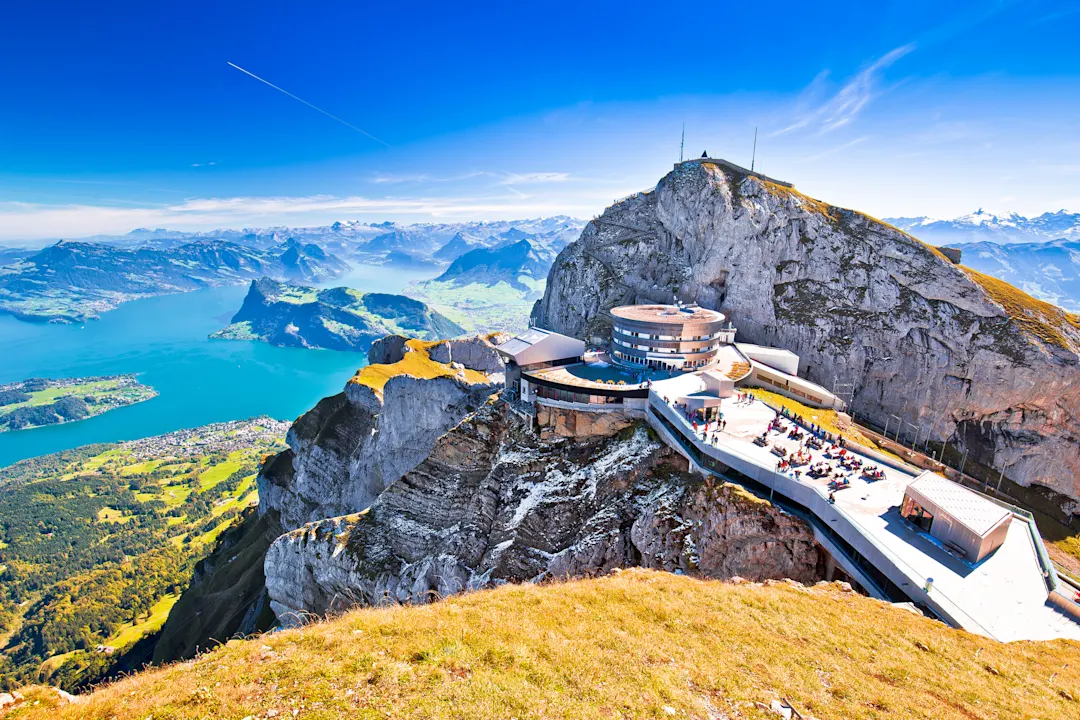
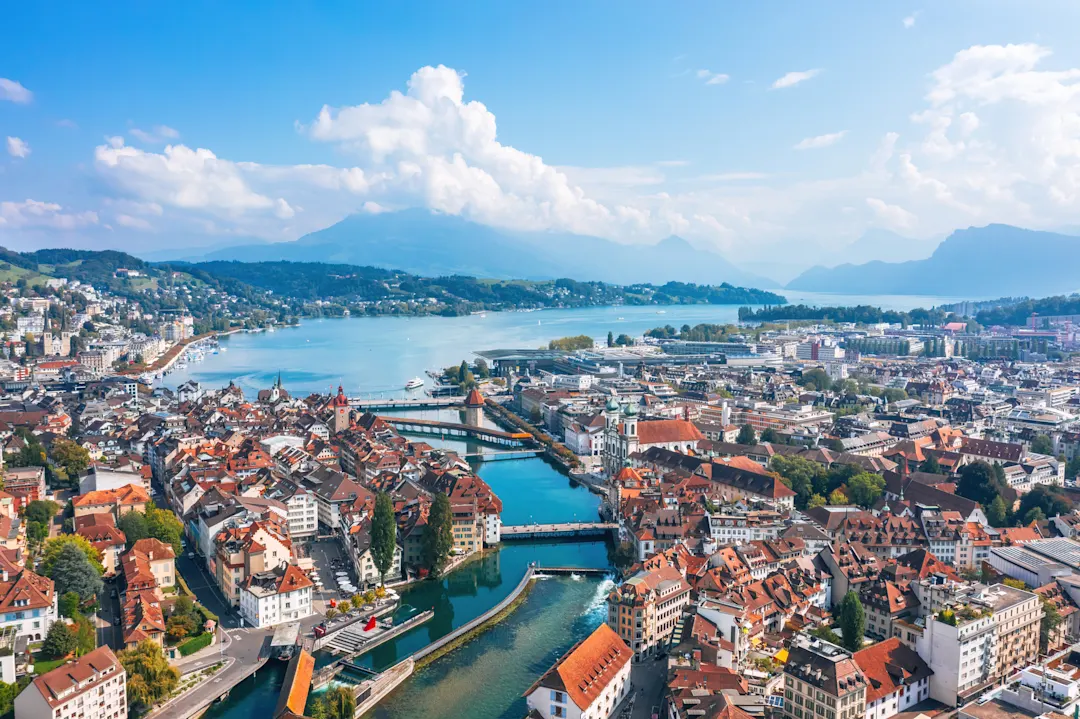
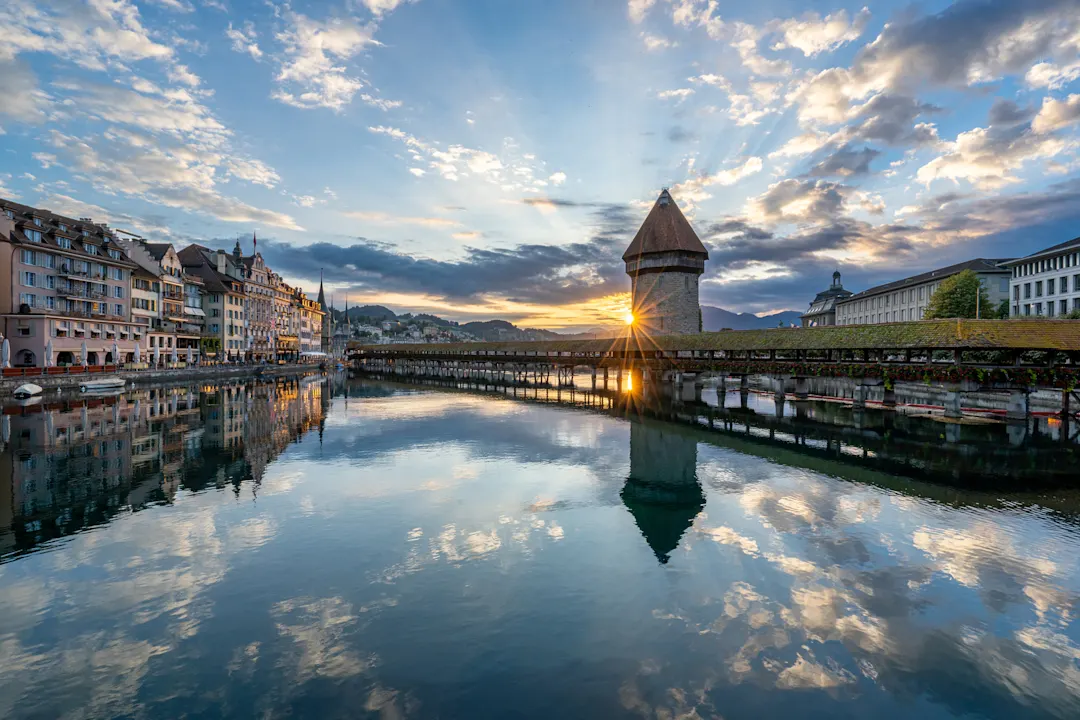
Lucerne is a year-round gem, but it is arguably at its most beautiful during late spring (May to June) and early autumn (September to October). During these shoulder seasons, the visibility for mountain excursions to Mt. Pilatus or Mt. Rigi is often at its clearest, and the crowds on the Chapel Bridge are manageable. Summer offers the chance for refreshing boat cruises across Lake Lucerne under bright blue skies. Winter is equally captivating, particularly for those wanting to combine a historic city stay with easy access to the family-friendly ski slopes of central Switzerland.
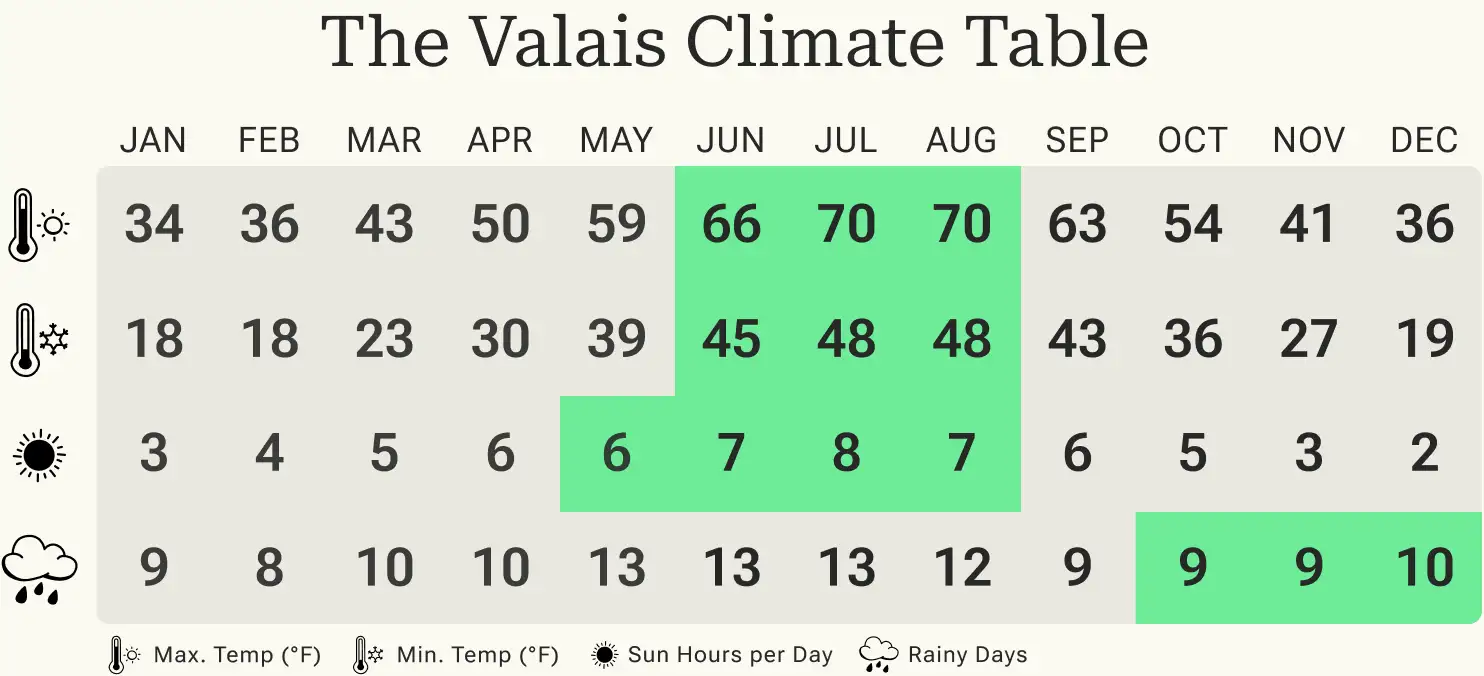
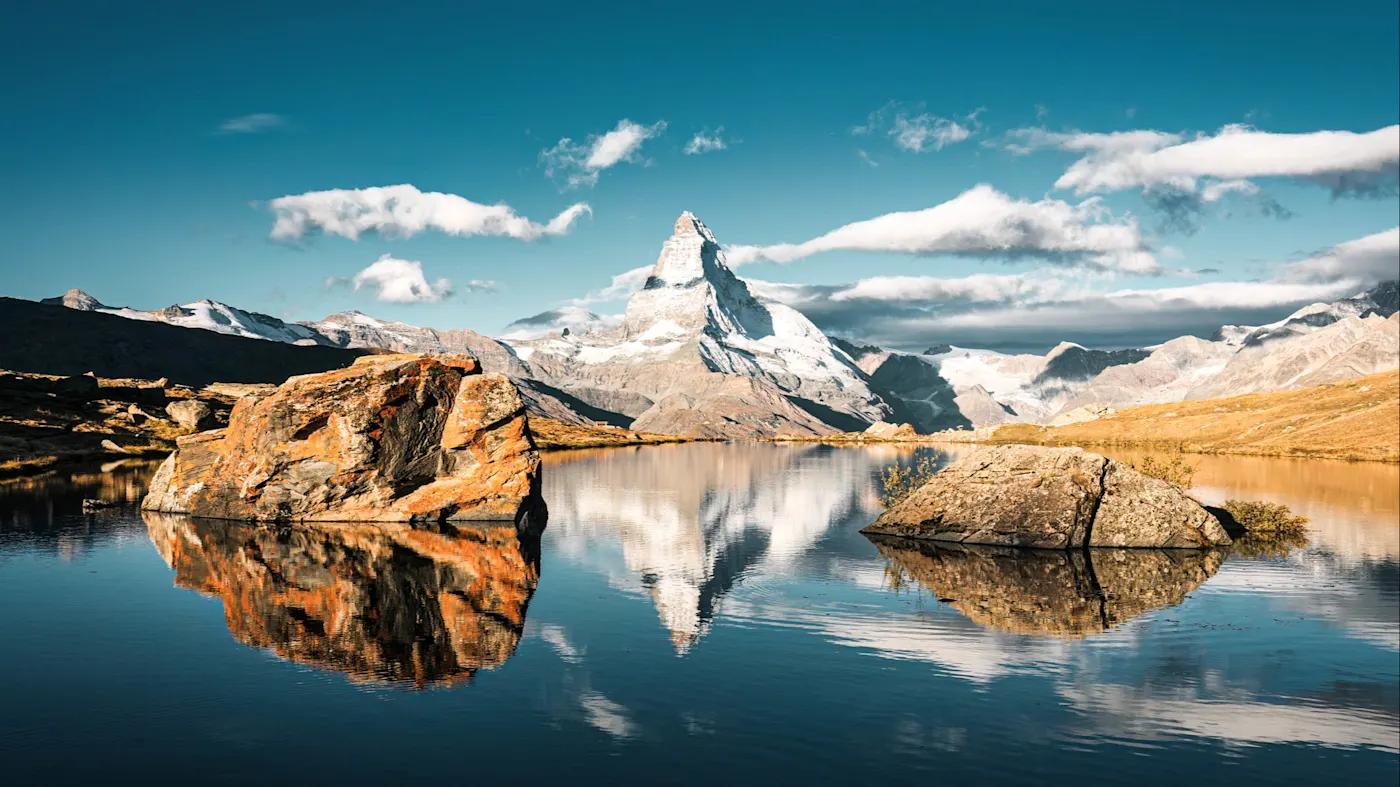
Best time to visit the Valais (Zermatt & The Matterhorn)
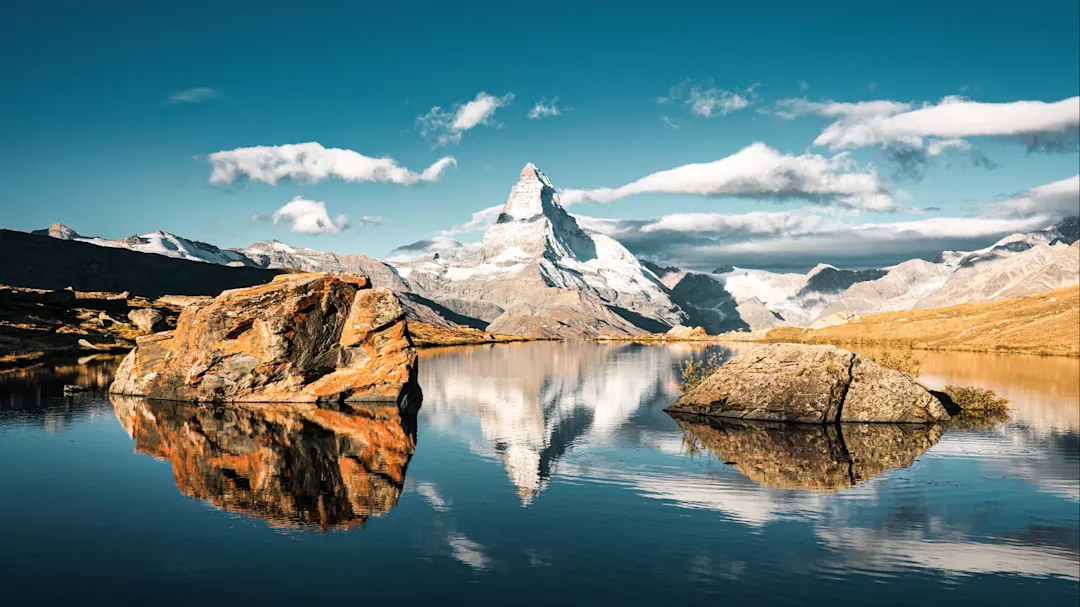
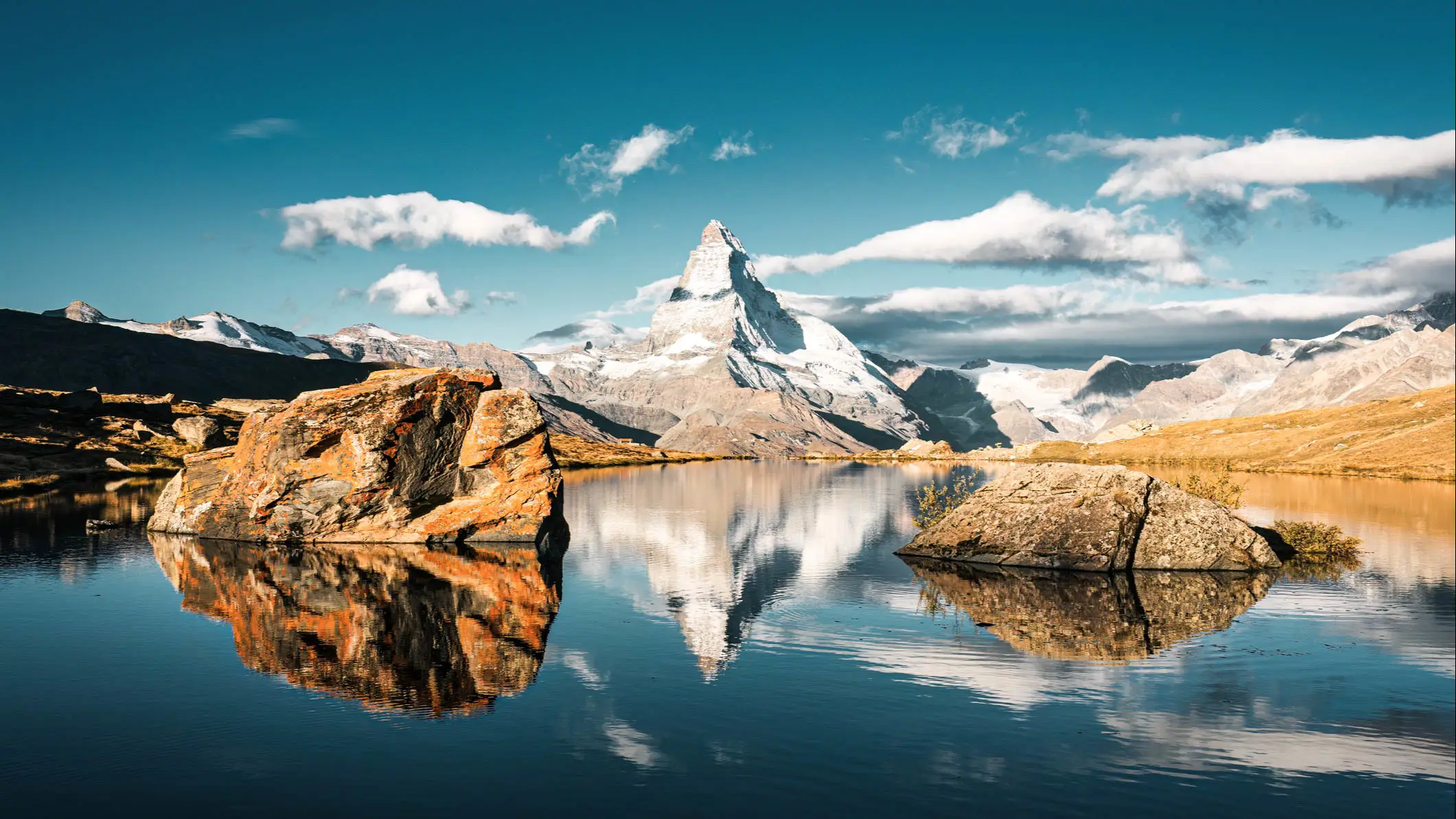
The Valais region is home to the highest peaks in Switzerland and offers two distinct "best" times. For high-altitude mountaineering and iconic views of the Matterhorn reflected in alpine lakes, visit from July to September. The weather is stable, and the mountain air is invigoratingly fresh. For winter sports enthusiasts, Zermatt is legendary for its long season, with December to April providing world-class skiing. Even in mid-summer, Zermatt offers unique glacier skiing, making it one of the few places in Europe where you can find snow year-round.
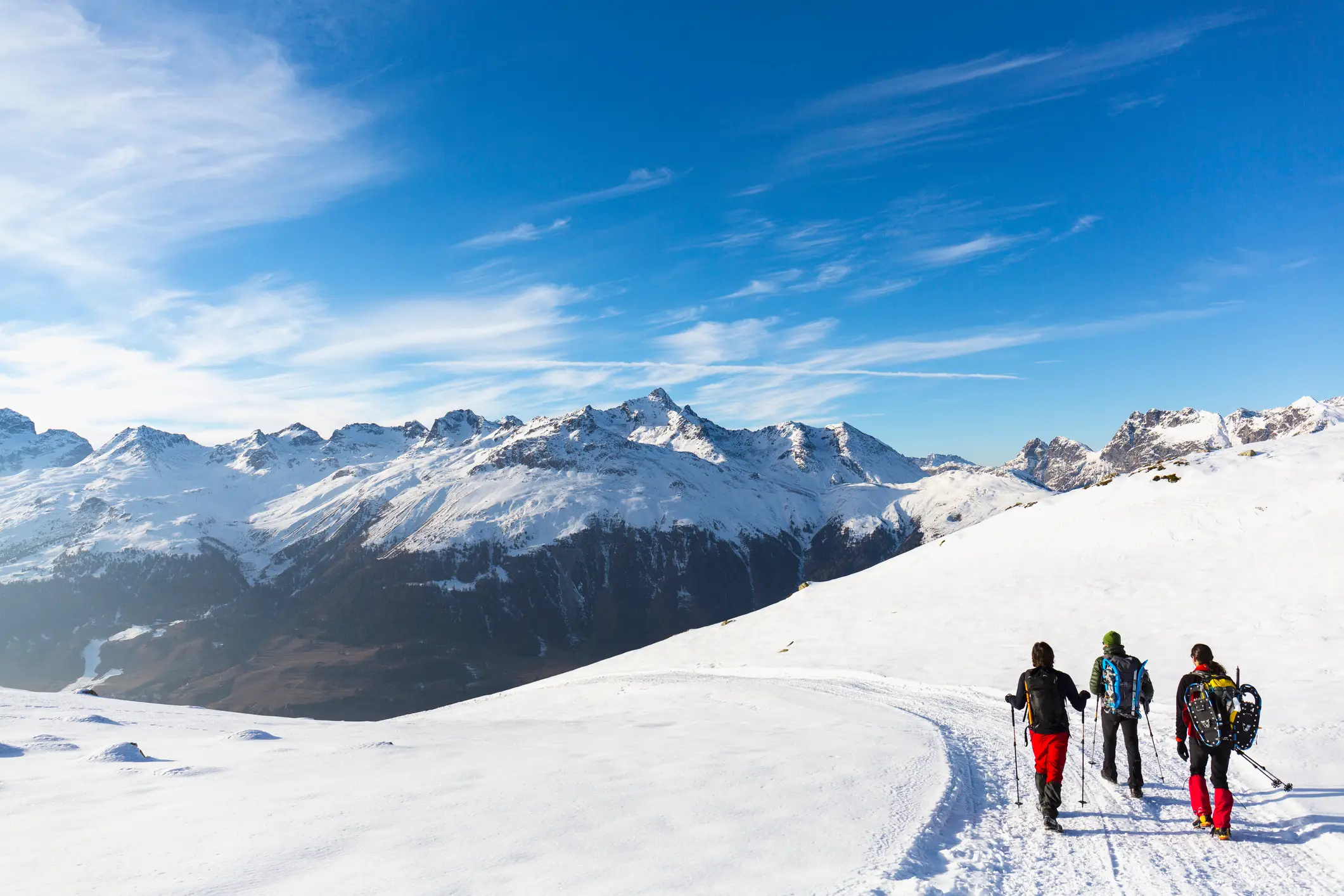
Alpine Skiing & Snowboarding
Switzerland is the definitive global destination for winter sports, boasting high-altitude resorts that guarantee snow throughout the core season. The premier time for hitting the slopes is from late December to March, when the powder is deepest and the après-ski culture is in full swing. For those seeking slightly longer days and sunnier runs, February and March are often preferred. If you’re a die-hard enthusiast, high-altitude resorts like Zermatt and Saas-Fee even offer glacier skiing well into the spring and summer months, though the most extensive trail networks are open during the traditional winter window.
High-Altitude Hiking & Trekking
To explore Switzerland’s legendary trail network—including the famous Tour du Mont Blanc or the Bear Trek—the optimal window is July through September. While lower-elevation valley hikes become accessible as early as May, the high mountain passes often remain snow-bound until early July. Mid-summer provides the most stable weather and ensures that mountain huts are fully operational for overnight stays. For those chasing the most vibrant colors, September is a spectacular choice, as the visibility is typically at its peak and the golden larch trees begin their autumn transformation.
Scenic Rail Journeys
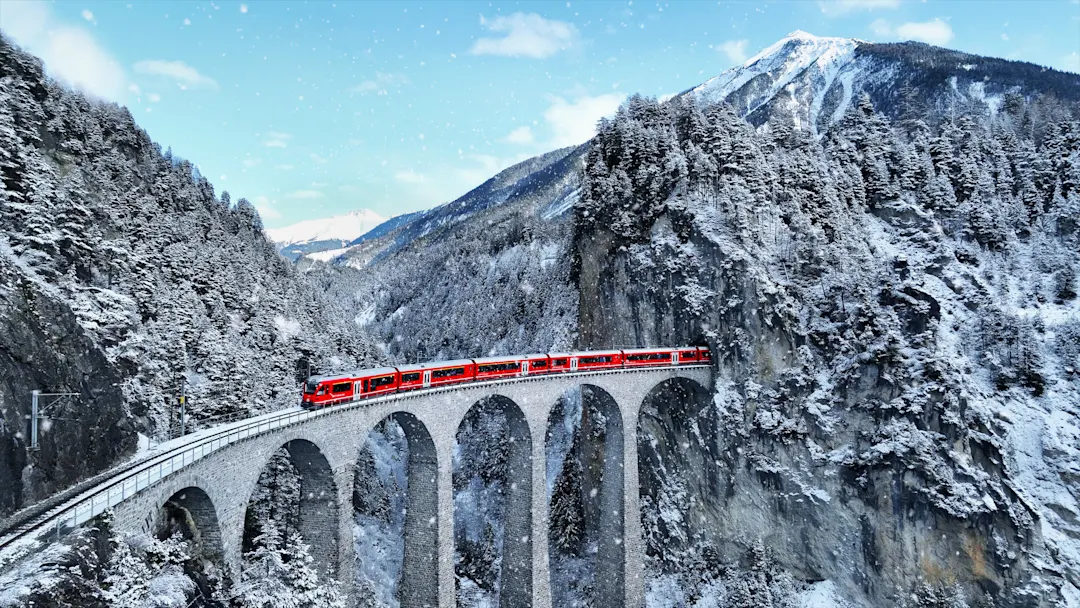
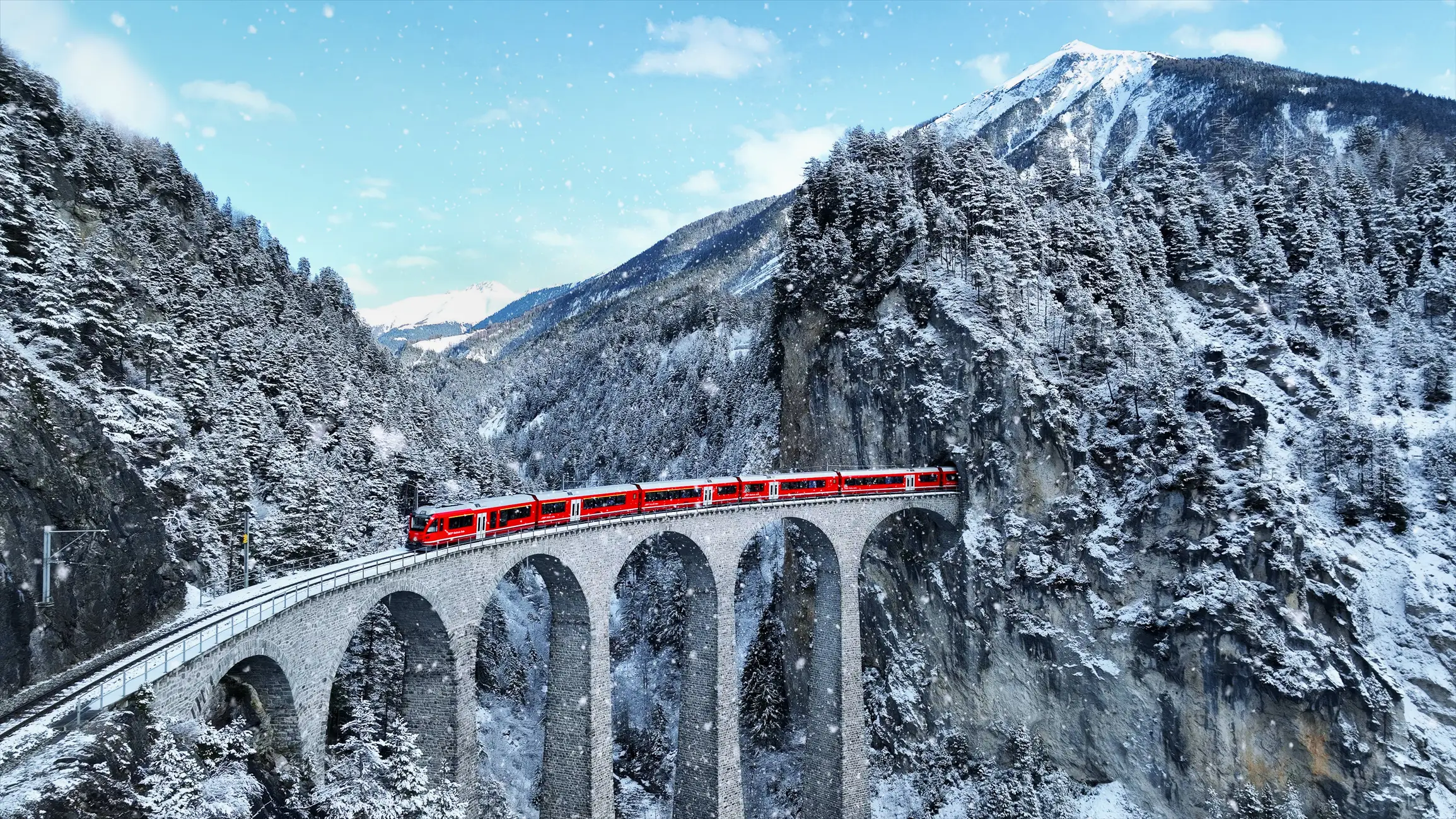
Switzerland's rail network is a masterpiece of engineering, and the best time to experience it depends on the scenery you prefer. For the iconic Glacier Express or Bernina Express, January and February offer a surreal, snow-white "winter wonderland" perspective. Conversely, a journey in June or September showcases the dramatic contrast between the emerald valleys and the permanent glaciers of the peaks. No matter the month, the floor-to-ceiling panoramic windows provide a front-row seat to the country's changing topography, making rail travel the most reliable year-round activity in Switzerland.
Lakeside Relaxation & Water Sports
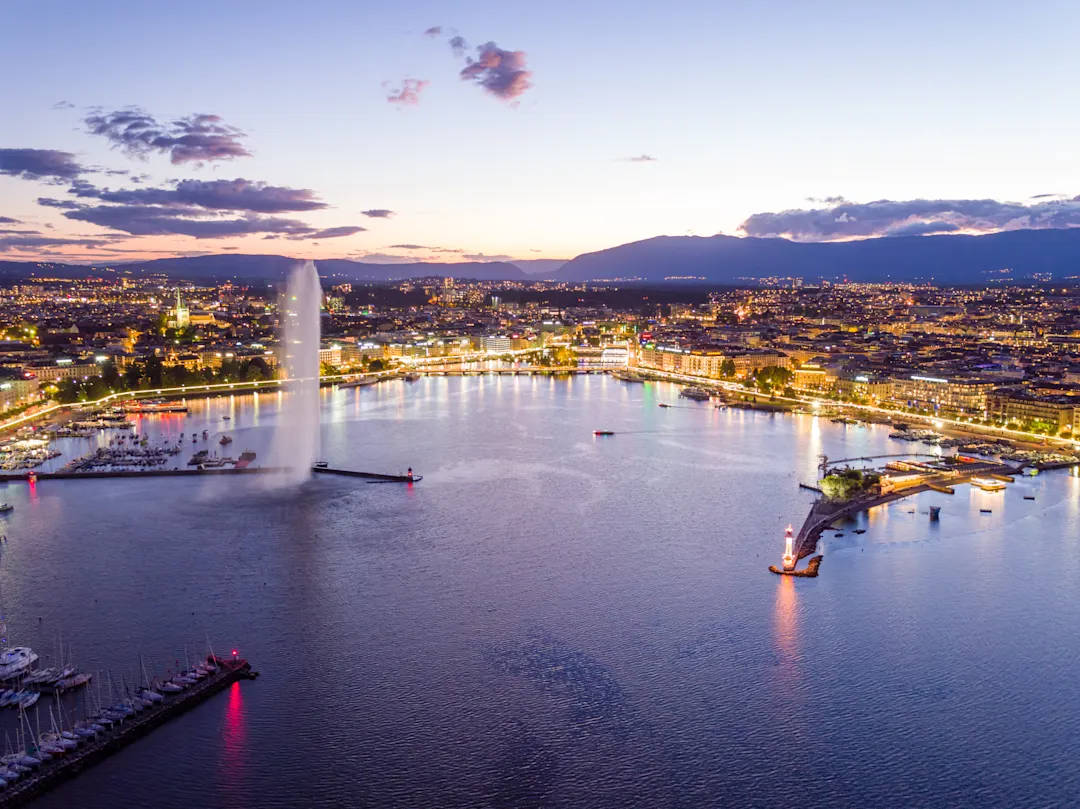
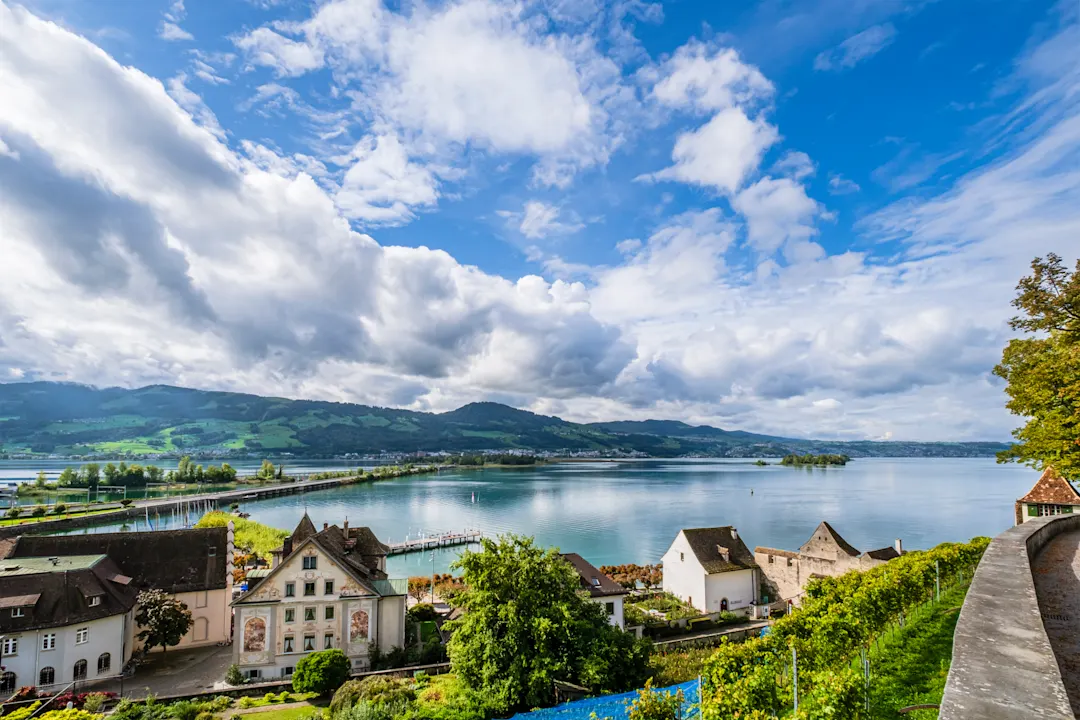
The Swiss "Riviera" regions, particularly around Lake Geneva, Lake Lucerne, and the sun-drenched Lake Lugano in the south, are best enjoyed from late June to August. During the height of summer, the water temperatures in the larger lakes become refreshing enough for swimming, paddleboarding, and sailing. This is also the season for the world-renowned Montreux Jazz Festival, where the music vibrates right along the water's edge. If you prefer a calmer experience, the shoulder months of May and September are perfect for scenic boat cruises and dining on lakeside terraces without the peak-summer bustle.
Family vacation
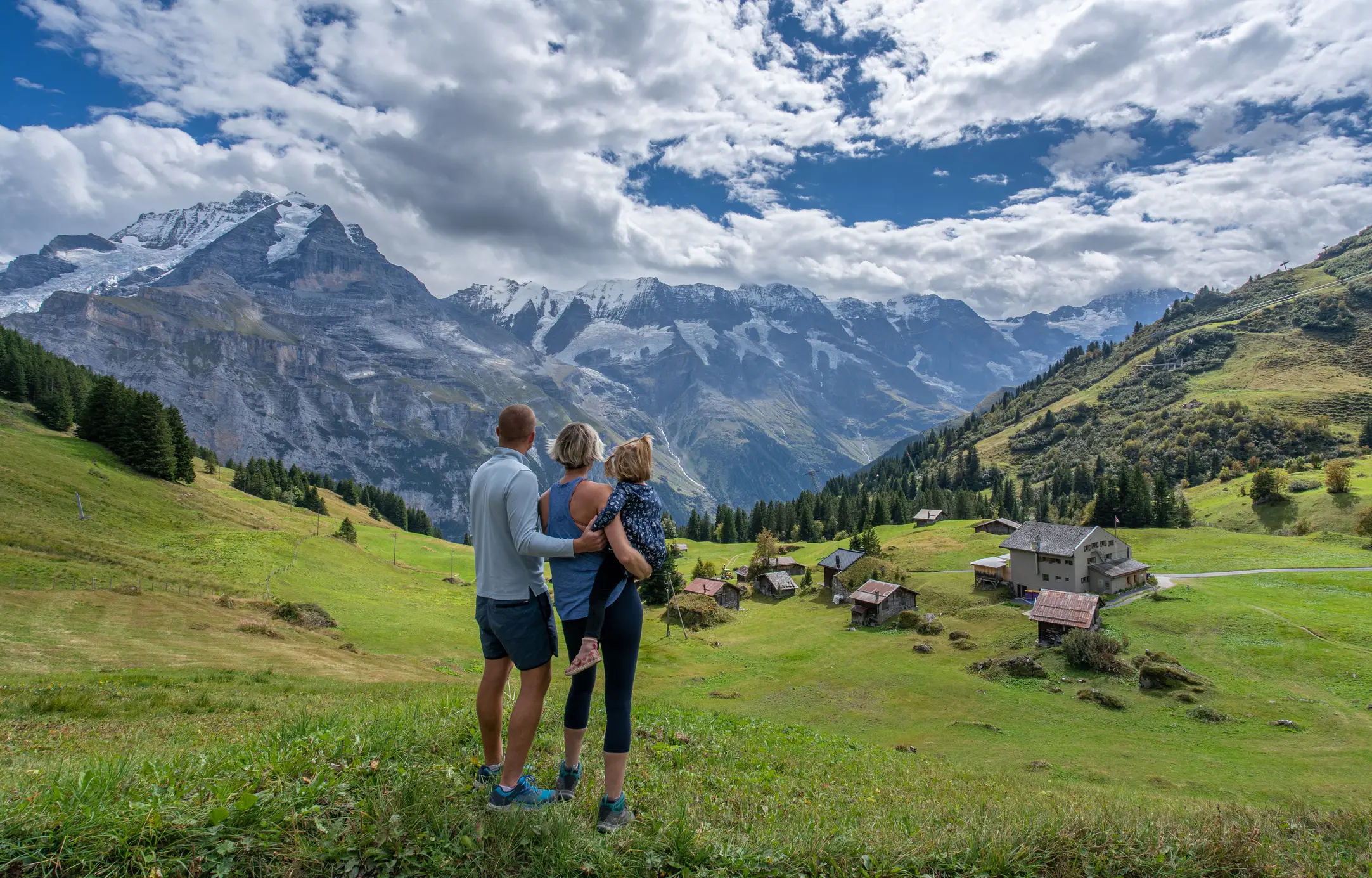
Switzerland is a giant outdoor playground for families, offering everything from chocolate factory tours to mountain adventure parks. The best time for a family trip is generally July and August or late December to February. Summer provides the perfect climate for lake swimming and themed hiking trails, like the Flower Trail in Mürren. If your family enjoys the snow, the winter months offer excellent ski schools and sledding runs. For a more relaxed pace with shorter lines at cable cars, consider the shoulder months of June and September.
City break
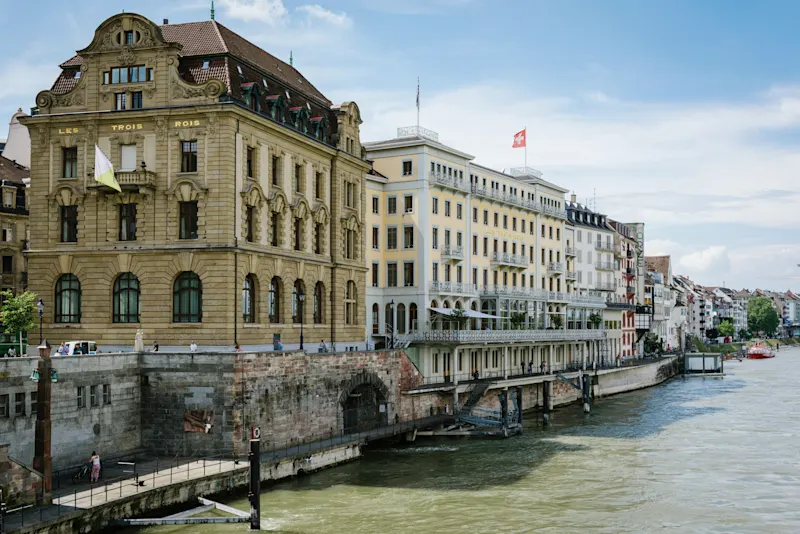
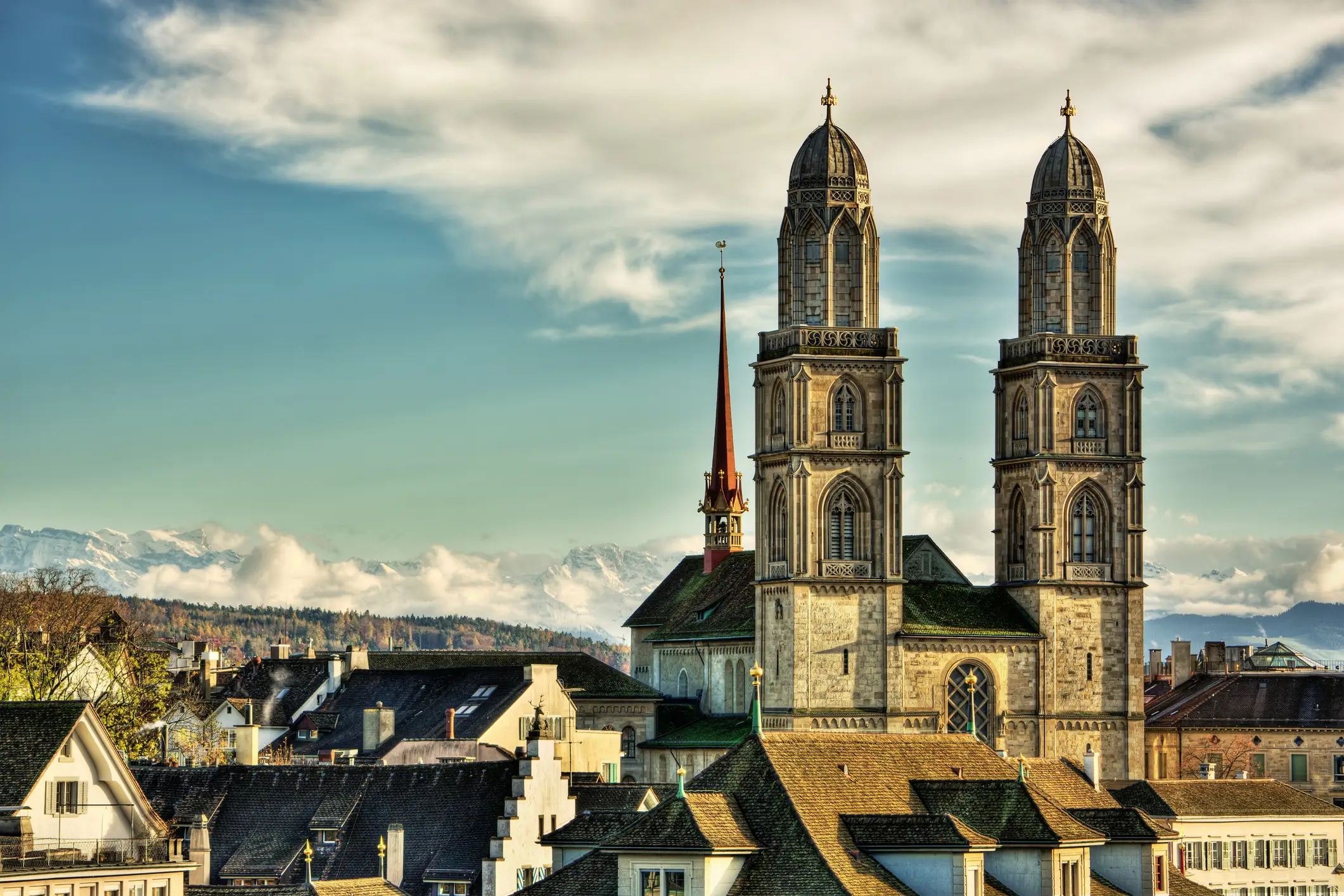
Swiss cities like Zurich, Geneva, Lucerne, and Basel are compact, clean, and best explored from May to September. During these months, the "Badi" culture (open-air swimming) is in full swing, and city life moves outdoors to the lakefronts and riverbanks. A city break in December is also highly popular; the urban centers transform into festive hubs with sparkling lights and some of Europe’s most sophisticated Christmas markets. Autumn (October) is a sophisticated choice for those interested in museum hopping and the vibrant gallery scenes of Basel or Zurich.
Road trip
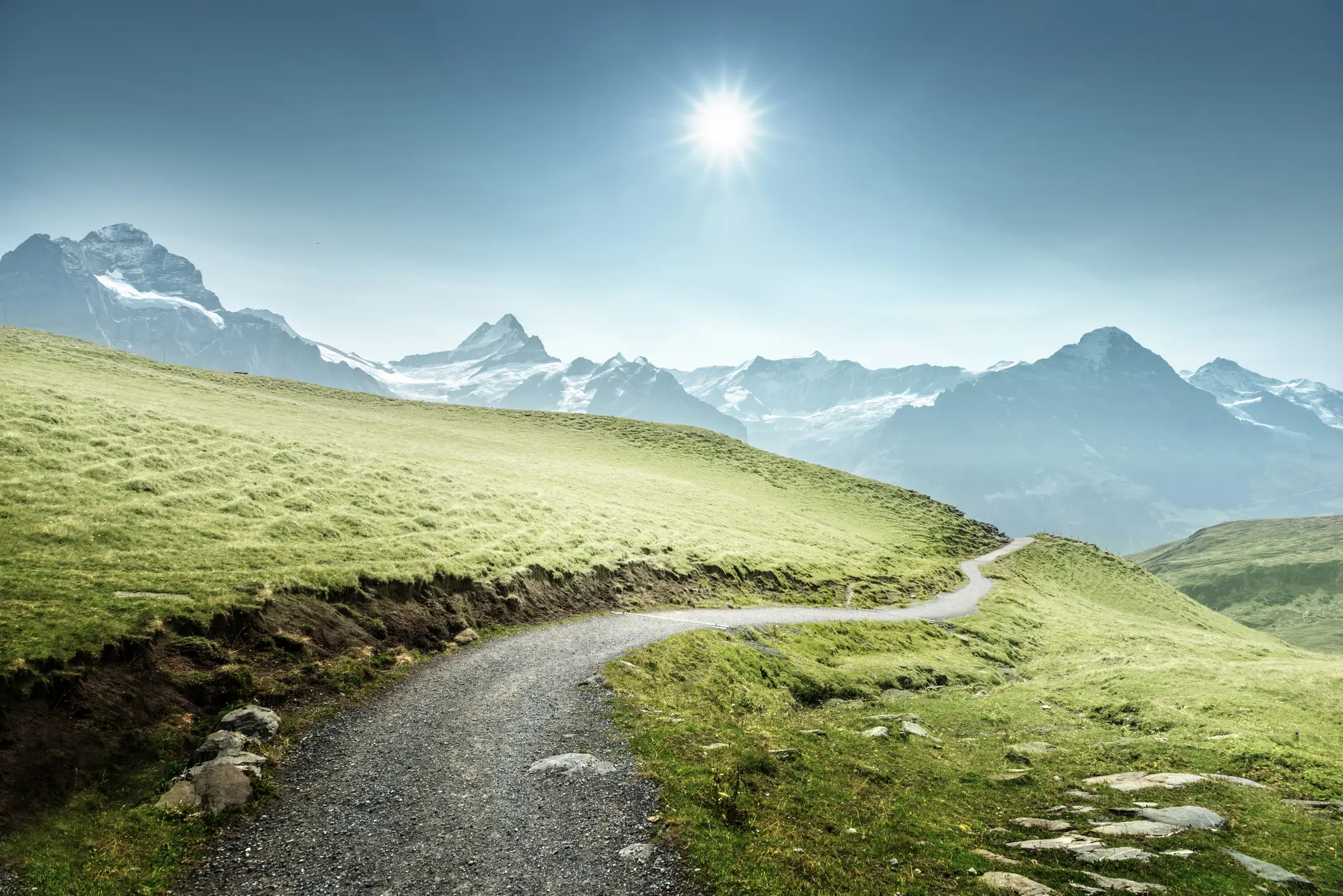
Driving through Switzerland offers some of the world's most dramatic mountain passes and scenic lakeside routes. The ideal time for a Swiss road trip is from late June to September. This is the only window when high-altitude passes, such as the Furka or Grimsel Pass, are guaranteed to be clear of snow and open to traffic. Driving during this time rewards you with panoramic views and accessible hiking stops along the Grand Tour of Switzerland. If you prefer the lowlands and wine regions, May and October offer beautiful colors and quieter roads.
Romantic escape
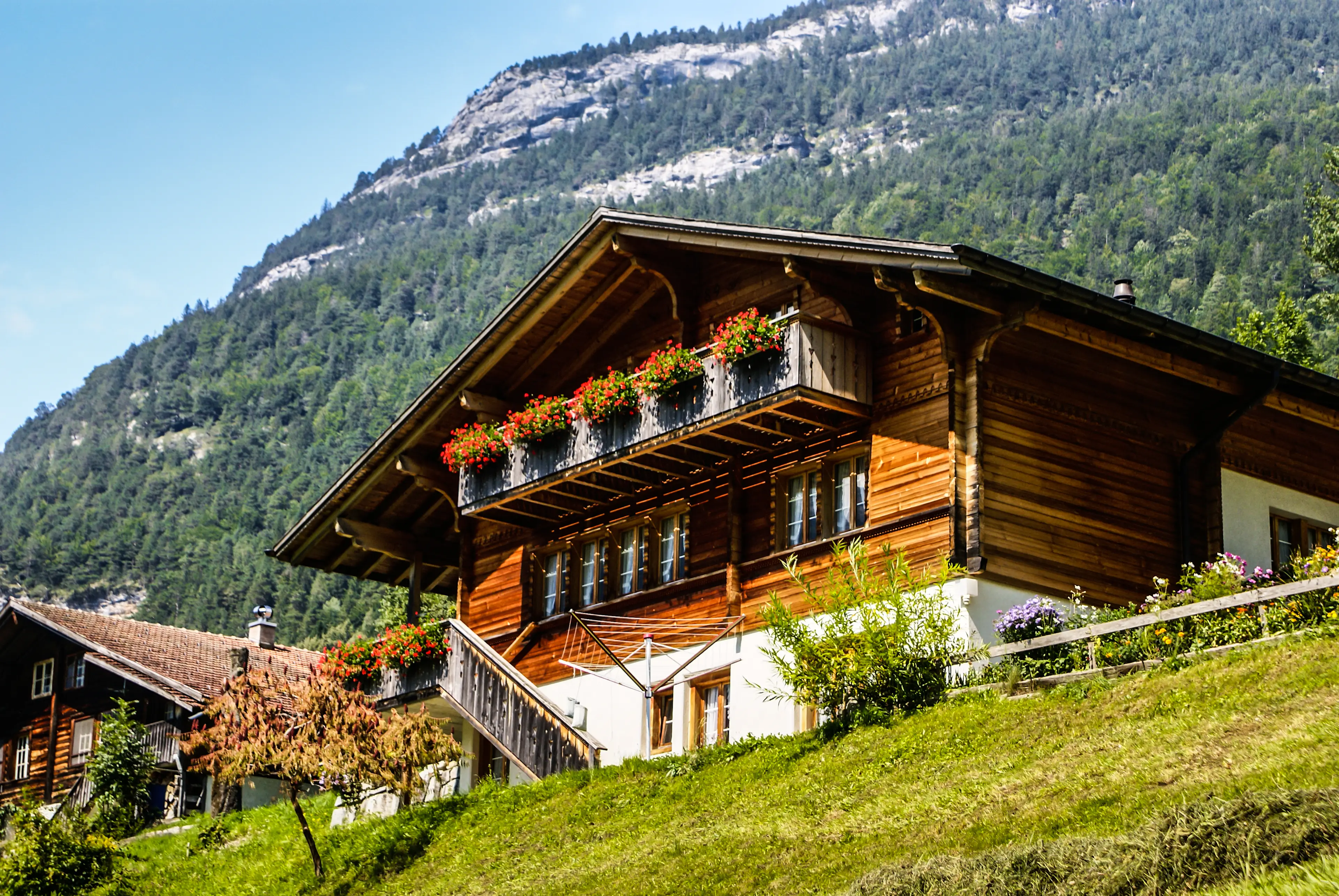
For a romantic getaway—whether it’s a boutique hotel overlooking Lake Lucerne or a cozy chalet in the shadow of the Matterhorn—the most atmospheric times are June and September, or December. Early summer brings blooming alpine roses and long evenings, while September offers golden light and crisp air perfect for private sunset cruises. For couples seeking a winter fairytale, December provides the ultimate romantic backdrop with snow-dusted cobblestone streets, horse-drawn carriage rides, and intimate fondue dinners by a roaring fire.